Impact Foundry (+ AI)
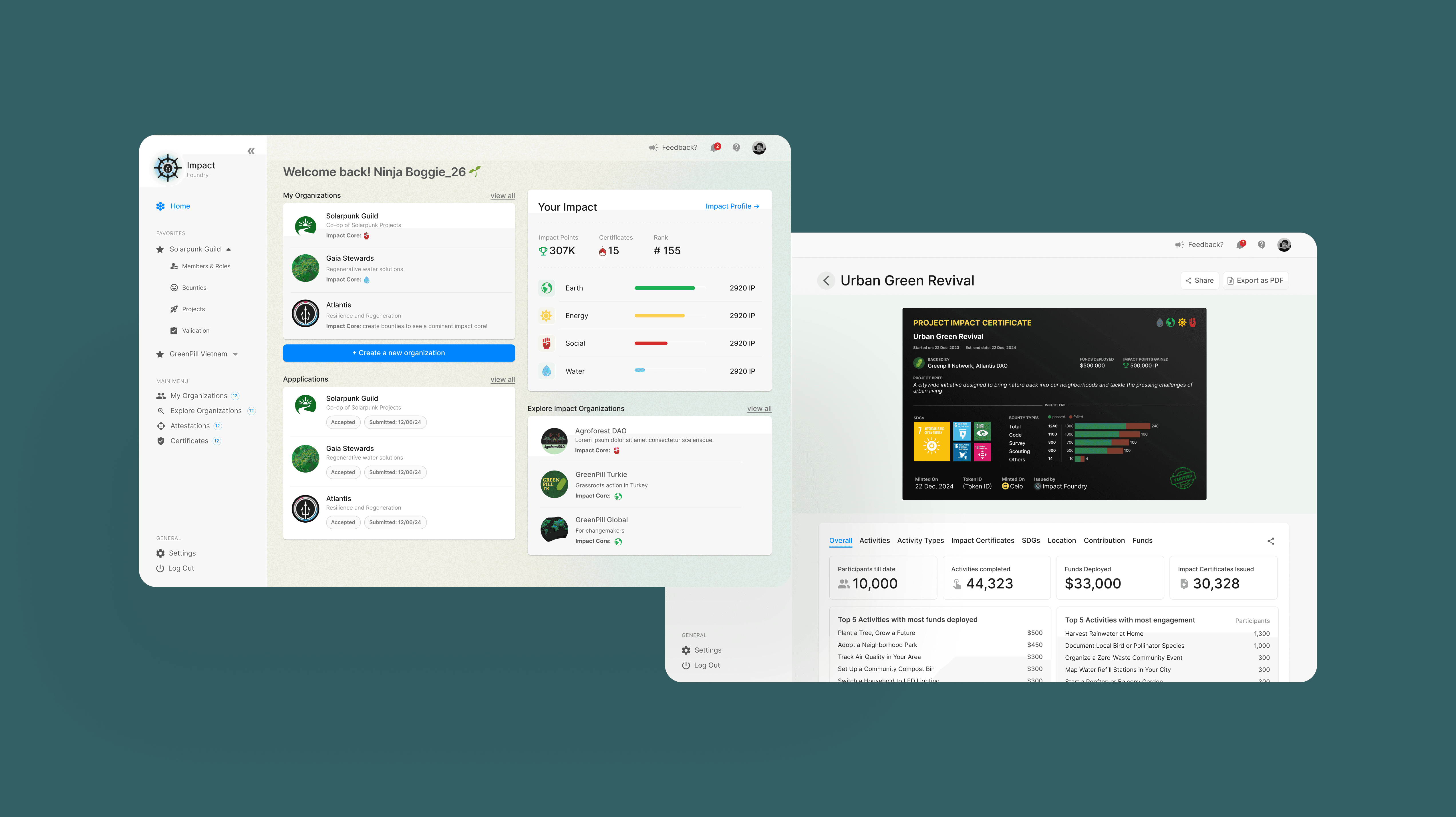
Impact Foundry is a platform designed for organisations to create and manage climate-positive activities
Industry: Climate Tech- Atlantis
My Role: Lead Product Designer
Status of Project: Live, link
Impact Foundry is a platform that enables organizations to design and manage climate-positive initiatives through structured projects and bounties. 
It acts as the backend ecosystem powering Impact Miner where organizations create opportunities, and users participate in real-world impact.
My role focused on designing the core system for creating, managing, and validating bounties, ensuring it was scalable, transparent, and easy to use for non-technical stakeholders.
Note- The design language and main screens were established by a previous designer so I had to continue using that and while I have created many screens for this product I will only be focusing on the most unique aspects for this case study.
Business Context
Organizations working in climate and sustainability face systemic challenges:
Difficulty in mobilizing consistent participation
Lack of transparent impact tracking
Fragmented tools for campaigns, funding, and validation
Low trust in reported impact outcomes
Existing systems are either:
Too manual and operationally heavy, or
Too abstract and disconnected from real-world action
Business Goals
Enable organizations to launch and scale climate initiatives
Provide verifiable proof of impact through on-chain systems
Create a structured pipeline from idea → action → validation
Competitive Landscape
Climate Program Platforms- strong in carbon tracking, weak in user participation systems
• Patch
• WatershedVolunteer / NGO Tools- strong in operations, weak in engagement + incentives
• Salesforce Nonprofit Cloud
• GoodstackWeb3 / DAO Tooling- strong in incentives and decentralization, but complex to use and not tailored for climate action workflows
• Coordinape
• Gitcoin
Key Gaps Identified
Design structured initiatives
Engage users through tasks
Validate outcomes
Reward participation
Track impact transparently
Users & Personas
Persona 1: The Sustainability Lead
Works at: NGO / climate startup / CSR team
Goals:Launch initiatives
Drive participation
Measure impact
Pain Points:Tools are fragmented
Hard to track outcomes
Low user engagement
Needs:Structured workflows
Clear metrics
Easy campaign setup
Persona 2: The Program Operator
Role: Manages day-to-day execution
Behavior:Creates and monitors tasks
Validates submissions
Pain Points:Manual validation is time-consuming
Lack of standardization
Needs:Efficient validation systems
Clear task structures
Automation support
Persona 3: The Impact Funder / Partner
Role: Provides capital or backing
Goals:Ensure funds lead to measurable outcomes
Pain Points:Lack of transparency
Difficulty trusting reported impact
Needs:Verifiable data
Clear reporting
Accountability mechanisms
Design Approach
Systemizing Impact Creation
I translated complex workflows into modular components:
• Organization → Project → Bounty → Task → Validation
This allowed for:
- Scalability
- Reusability
- Consistency across use casesReducing Operational Complexity
• Guided flows for creating projects and bounties
• Templates for repeatable structures
• Clear separation between creation, execution, and validationDesigning for Trust
• Proof-based submissions
• Validation roles and workflows
• On-chain attestations and impact certificates 
This ensures:
- Transparency
- Accountability
- Credibility
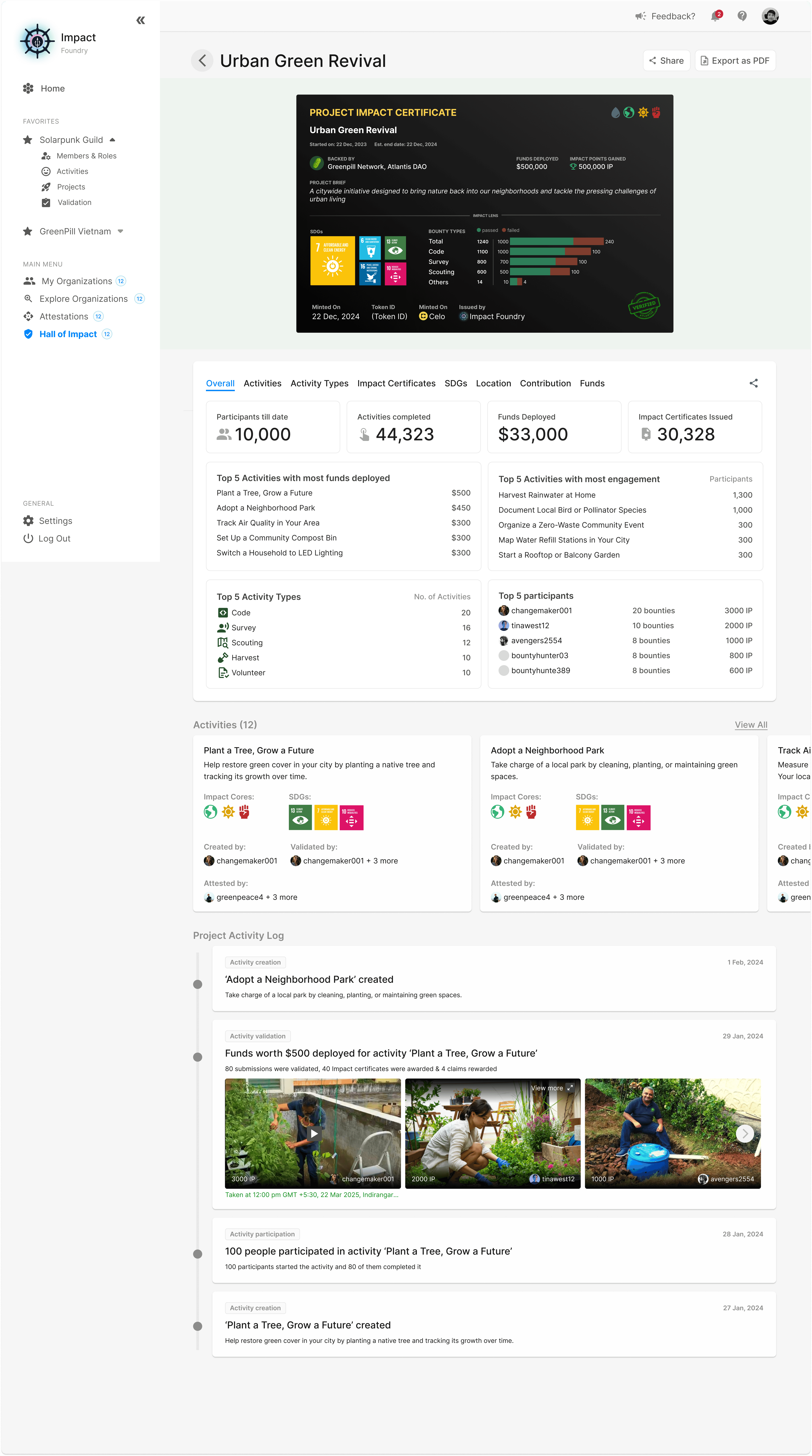
The main problem faced by organisations was getting an overview and detailed statistics of their projects (the on ground data which comes from the mobile app Impact Miner) as well as being able to share that with investors/the public. Hence, we came up with a new feature called ‘Impact Report’.
The first step for a user is to generate the ‘Project Impact Certificate’ that captures the overview and creates a digital collectible (ie NFT) such that it can’t be tampered with. After that they can see the dashboard with statistics regarding all the challenges in the project. A project is simply a collection of activities and each activity is a series of tasks that can be digital or physical.
There are 3 parts to the report; data visualisations, list of activities in the projects and the timeline of the projects. Users can also share a link to this page or export it as a pdf.

Explorations
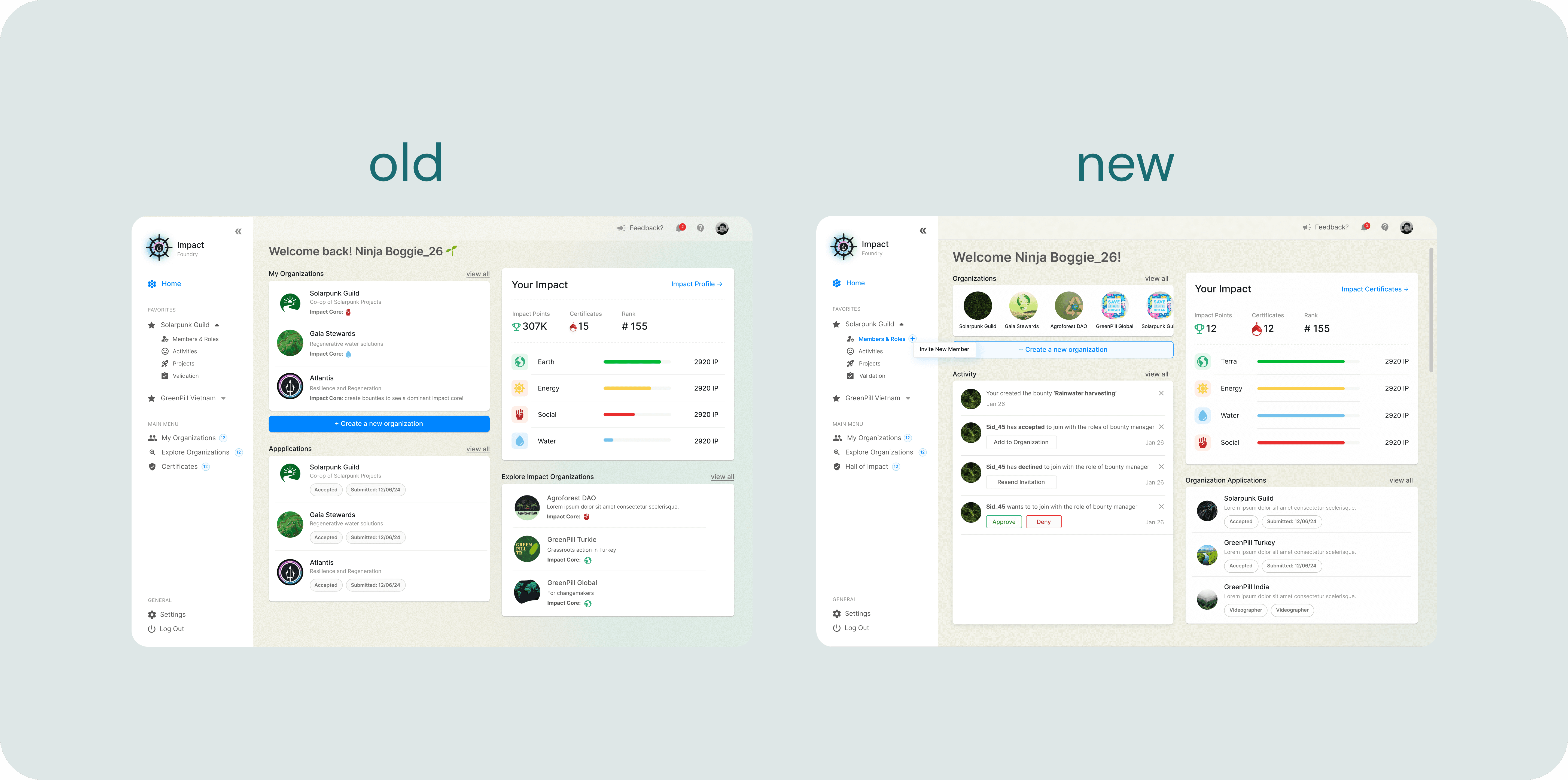
I also worked on re-imagining some screens; the organisations section in the home page took up a lot of space that I thought could be diverted to other information like an activity log such that users could take more actions from the home page itself
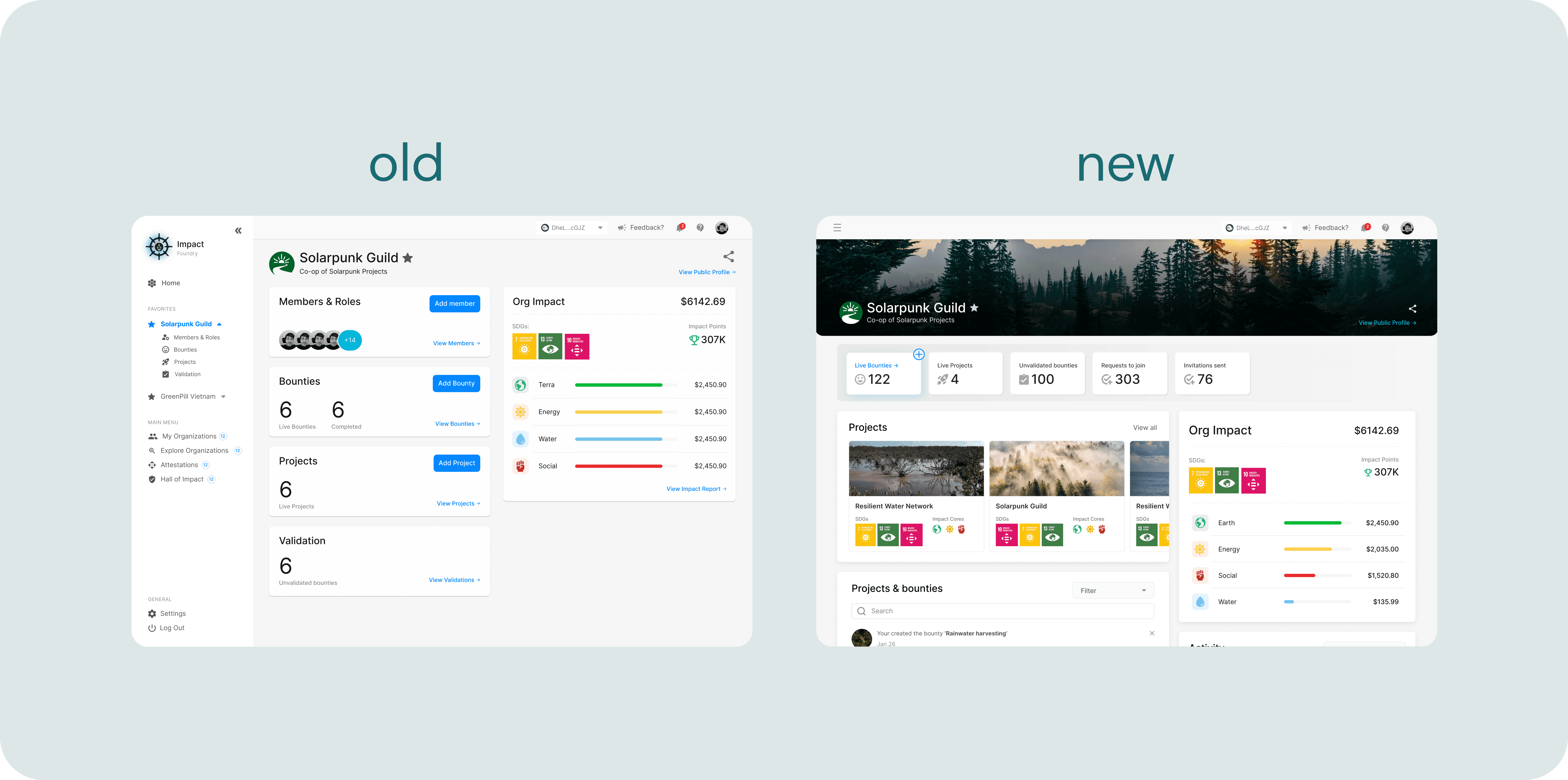
The org home page also had a lot of information that could be condensed. The re-design allows for more quick actions and better visualisation
I also did a little exploration to try to visualise a future version of this platform
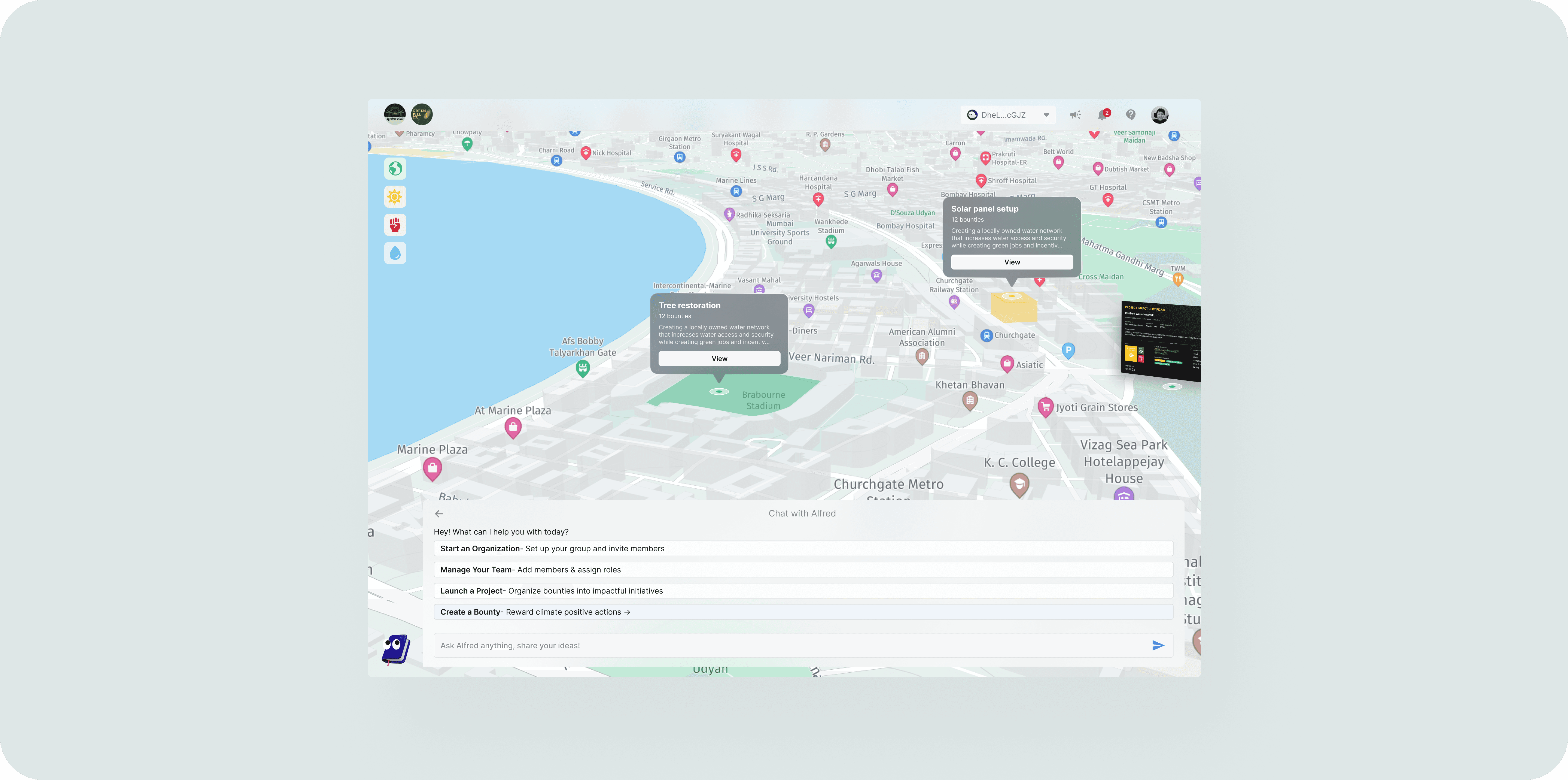
AI Explorations
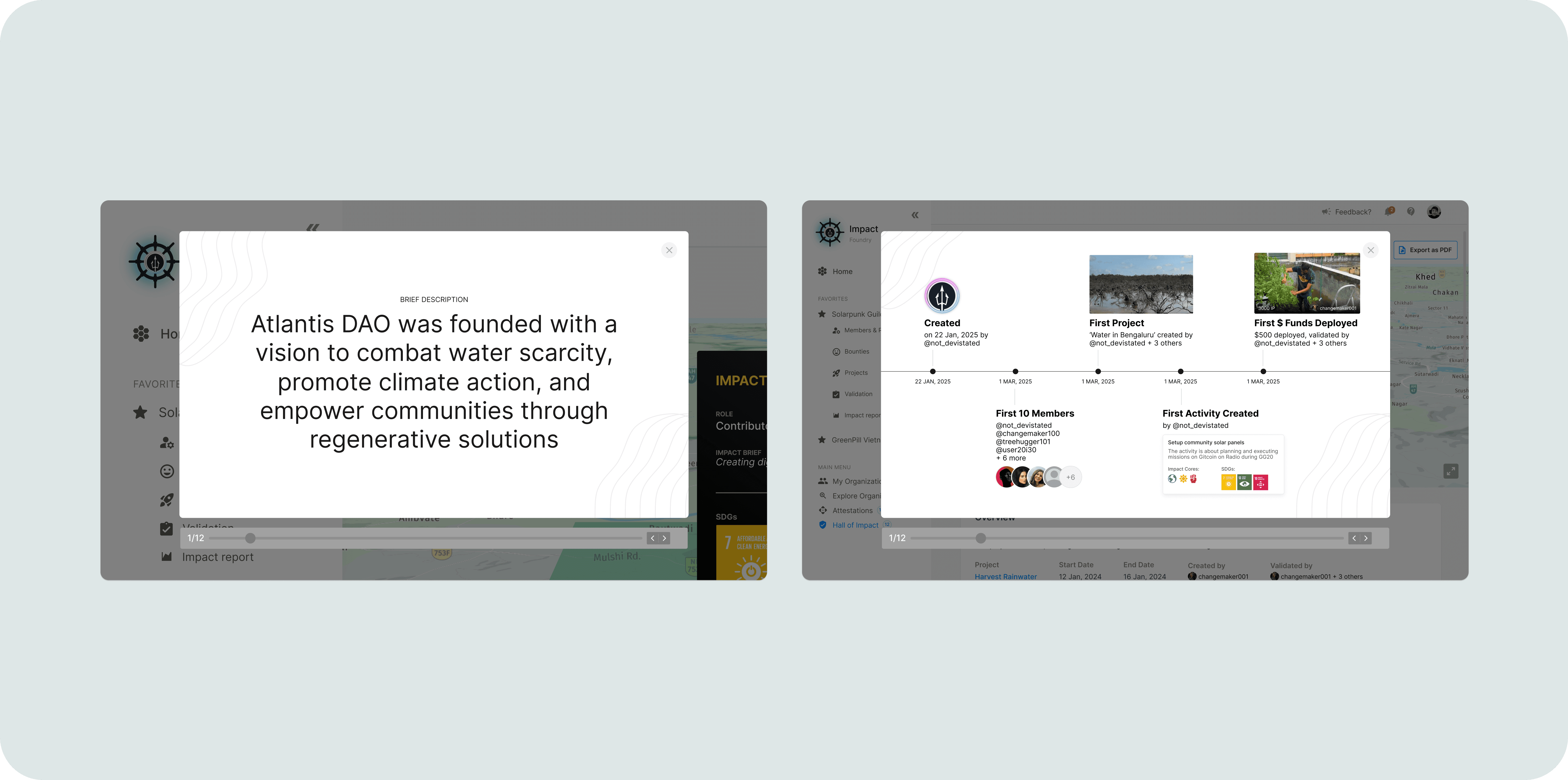
One idea for the AI explorations was to have a feature called 'story mode' in impact reports where external users can understand the history of an organisation and their projects in a more engaging manner
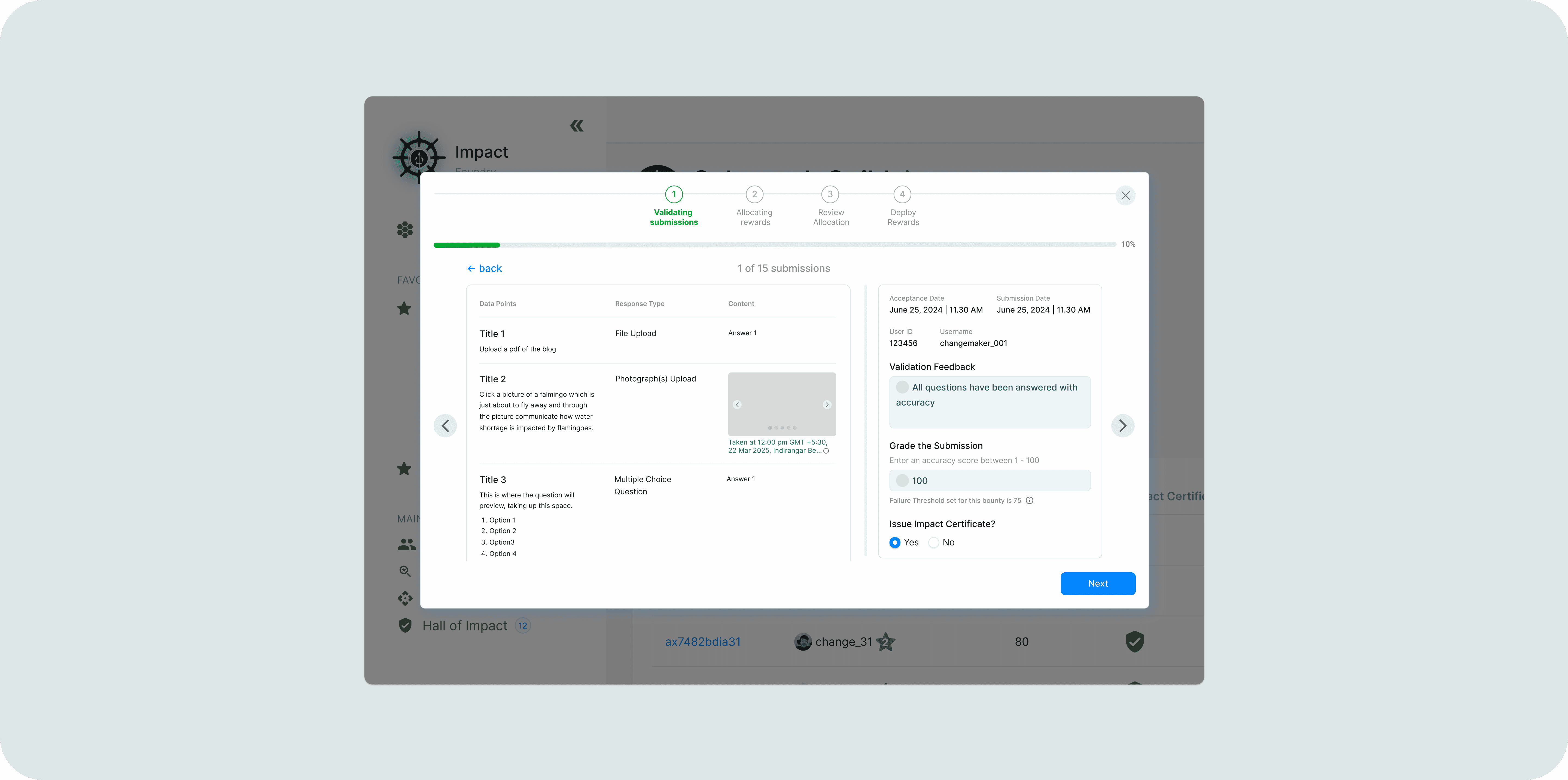
Another idea was to visualise how we can integrate our existing AI agent 'Alfred' into the product such that users can easily create activities and evaluate submissions.
Bonus- we made this video to explain how impact reports work (I edited it hehe)